

Tashkent's mountains: Chimgan, Charvak and Amirsoy through the seasons
Less than two hours from the capital lie ski slopes, a turquoise reservoir and the trails of Ugam-Chatkal National Park. When to go, how to get there and what to do in Chimgan, Charvak and Amirsoy.
Information last updated on 17.11.2026.
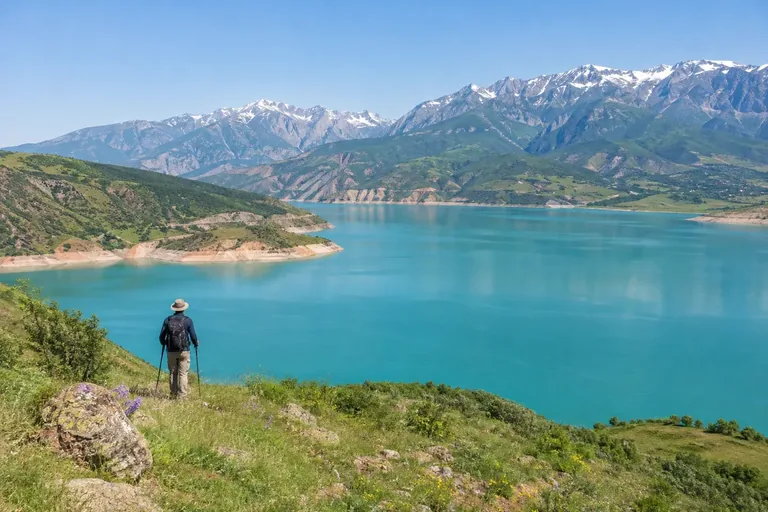
Most visitors come to Uzbekistan for its Silk Road cities and never suspect that real mountains rise just beyond Tashkent. The spurs of the Western Tien Shan — the Chatkal and Ugam ranges — begin less than an hour's drive from the capital, and within about 1.5–2 hours you can be skiing, swimming in a turquoise reservoir or walking through juniper forest. For Tashkent residents this is the weekend escape; for travellers it is the perfect counterweight to days of madrasahs and bazaars.
The main areas
Chimgan
Chimgan is the classic mountain resort, about 85 km from Tashkent at around 1,600 metres, overlooked by the 3,309-metre peak of Greater Chimgan. It has been a holiday area since Soviet times, with hotels, cottages, a chairlift and plenty of cafés. In winter it is used for skiing and sledging, roughly from December to mid-March; in summer for hiking, horse riding and escaping the city heat.
Amirsoy
Amirsoy is the modern resort of the area. An eight-seat gondola carries guests up to 2,290 metres, and about 15 km of slopes serve everyone from beginners to experienced skiers. There are chalets, a hotel, a spa, a heated outdoor pool and several restaurants. In summer the gondola runs for sightseeing, hiking and mountain biking. A weekday pedestrian round trip on the gondola costs approximately 85,000 som; weekends cost more and ski passes are separate. In winter the lifts run for skiers from about 08:00 to 16:00.
Beldersay
Next to Chimgan, Beldersay is known for its long chairlift up the slopes of Mount Kumbel, with views of the Chimgan peaks and the Charvak Reservoir from the top. Its runs are long and steep, attracting experienced skiers. The lifts have been under renewal in recent years, so check which ones are running before you go.
Charvak Reservoir
The Charvak Reservoir was formed by a 168-metre rock-fill dam built on the Chirchiq River between 1964 and 1970. Fed by the Pskem, Chatkal and Koksu rivers, it is ringed by mountains and by villages such as Brichmulla and Yusufkhona. In summer it becomes Tashkent's favourite beach: resorts, boat trips and water sports line its shores. The swimming season runs from June to September; most beaches belong to resorts and charge a fee. The best panorama is from the viewpoint above the dam.
Ugam-Chatkal National Park and Khumsan
For real hiking, head for Ugam-Chatkal National Park, established in 1992 and covering more than 668,000 hectares. It includes the Chatkal Reserve, recognised as a UNESCO biosphere reserve in 1978, and shelters juniper and walnut forests, brown bears, mountain goats and more than a thousand plant species. The village of Khumsan, at the entrance to the Ugam valley, is the usual starting point for walks and horse treks, with guesthouses serving home cooking. Carry your passport: registration at park checkpoints is required, and areas close to the border may need a special permit.
What to do, season by season
- Winter (December–March): skiing and snowboarding at Amirsoy, Chimgan and Beldersay, sledging for families, snowy views from the gondola. Snow conditions vary from year to year.
- Spring (April–May): green slopes, wild tulips and blossoming orchards; good for walks around Chimgan and Khumsan. Higher trails may still hold snow, and gorges are dangerous after rain.
- Summer (June–August): swimming and boating on Charvak, gondola rides and hikes at Amirsoy, tandem paragliding over the reservoir, overnight stays in cooler air. Even in summer you need a warm layer in the evening.
- Autumn (September–October): stable weather and golden colours; the best time for longer hikes such as the climb to Kumbel and for the Gulkam canyon, when its stream is lower.
Activities worth planning
- Day trip to Chimgan and Charvak: the classic combination — the dam viewpoint, the chairlift at Chimgan, lunch in the mountains and, in summer, a swim.
- Ski day at Amirsoy: rentals and lessons are available on site; beginners usually start with a couple of hours with an instructor.
- Tandem paragliding: flights over the reservoir usually last 10–20 minutes, run from spring to autumn and depend on wind and weather; no experience is needed, but there are weight and health limits.
- Gulkam canyon: a demanding day trek through a narrow gorge with boulders, small waterfalls and sections with ropes and chains. Go only with an experienced guide and never after heavy rain.
- Kumbel and Ugam-Chatkal hikes: alpine meadows and wide views; take water, sun protection and proper boots.
Getting there
Everything is roughly 1.5–2 hours by car from central Tashkent, via Chirchiq and the Bostanliq district. The easiest options are a taxi or a car with driver for the day, or an organised day trip with hotel pick-up. A ride-hailing app will get you there, but finding a car back from the mountains can be harder, so agree the return in advance. In winter, roads may require winter tyres or chains. Summer weekends are busy around Charvak and Amirsoy, so start early. On the way, the Sun Heliocomplex in Parkent district — one of the world's largest solar furnaces, built in the 1980s — makes an unusual detour; visits are by guided tour only.
Where to stay
You can easily do the mountains as a day trip, but staying a night lets you see sunrise over the peaks. Options range from the chalets and hotel at Amirsoy and resort hotels on the shore of Charvak to simple guesthouses in Khumsan and other villages. In summer and over New Year book well ahead.
Safety and practical tips
- Mountain weather changes fast; pack a warm layer, rain jacket and sun protection in any season.
- Mobile coverage is good around the resorts but patchy in the gorges and the national park.
- Do not attempt canyon routes or high trails alone; hire a local guide.
- Bring cash for village guesthouses, cafés and parking, although the big resorts accept cards.
- Respect the border-zone rules and carry your passport at all times.
Places in this guide
- Amirsoy Mountain ResortA modern year-round resort in the Chimgan mountains: gondolas, about 15 km of slopes, chalets and a spa.
- BeldersayA ski area next to Chimgan, known for its long chairlift up Mount Kumbel and steep runs for experienced skier…
- Pyramids — Charvak Oromgohi Resort HotelA large lakeside resort hotel on the Charvak Reservoir, known for its pyramid-shaped buildings.
- Charvak ReservoirA turquoise man-made lake ringed by mountains: summer swimming, water sports, resorts and superb views.
- Chimgan MountainsA mountain resort area ~85 km from Tashkent beneath 3,309 m Greater Chimgan: skiing in winter, hiking in summ…
- Gulkam CanyonA narrow, scenic gorge near Chimgan with a rushing stream, several waterfalls and an adventurous trekking rou…
- Khumsan VillageA mountain village near Charvak at the mouth of the Ugam valley, with orchards, springs and guest houses.
- Sun Heliocomplex (Big Solar Furnace)A giant solar furnace in the Parkent foothills — mirrored concentrator and heliostats.
- Ugam-Chatkal National ParkFounded in 1992, over 668,000 hectares of mountains: juniper forests, waterfalls, lakes and ancient rock art.