

Tashkent in 1 day: Old City, metro palaces and the modern centre
One well-paced day in Uzbekistan's capital: the Hazrati Imam complex and Chorsu Bazaar in the morning, lunchtime plov from the cauldron, a ride through the metro, the Museum of Applied Arts and an evening in the modern centre.
信息最近更新于 17.11.2026。
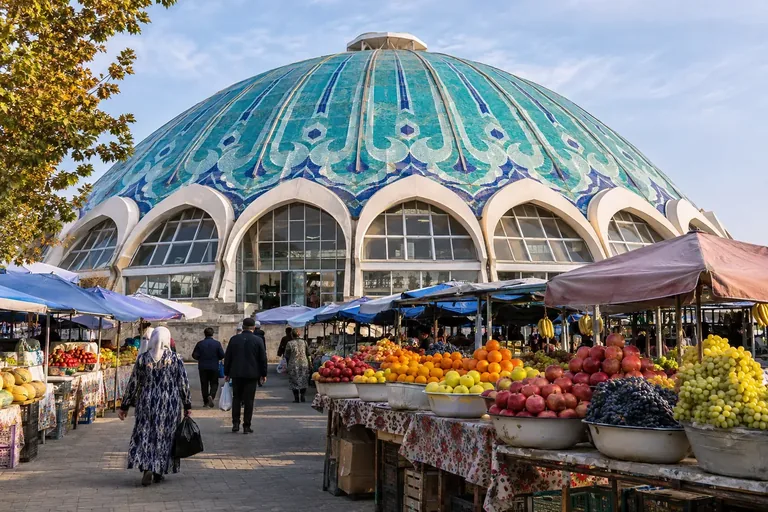
Many travellers treat Tashkent as a transit stop between the airport and the Silk Road cities, and that is a mistake. The capital is a city of two faces: the Old City, with its mosques, madrasahs and the vast Chorsu Bazaar, and the broad Soviet-era centre, rebuilt after the 1966 earthquake, whose metro stations and modernist buildings are now recognised by UNESCO. One well-organised day is enough to see both. Distances are long, so this plan combines short taxi rides with the metro, which is attraction and transport at the same time.
Before you start
- Transport: Yandex Go works across the city and short rides are inexpensive. A metro ride costs 3,000 som (cash or QR), slightly less with a transport card.
- Dress: for the morning's religious sites, cover shoulders and knees; women should carry a headscarf. Tourist access to mosques is limited on Fridays and at prayer times, so Friday is not the best day for this plan.
- Cash: bring som for the bazaar, the madrasah ticket and the metro.
- Season: in summer the afternoon heat is strong; the museum and metro in the middle of the day are a deliberate choice.
Morning: the Old City
Hazrati Imam complex
Start at Hazrati Imam, the spiritual centre of Tashkent, named after the 10th-century scholar Abu Bakr Kaffal Shashi. Around a large square stand the 16th-century Barak-Khan Madrasah, Kaffal Shashi's mausoleum, the Tillya Sheikh Mosque and the new Friday mosque with its two tall minarets. The real treasure is in the Muyi Muborak library: the Uthman Quran, one of the oldest surviving copies of the Quran, displayed in a separate hall with its own ticket. Entry to the square itself is free.
Right next door is the Center for Islamic Civilization, which opened in 2026 — a huge domed building with a multimedia exhibition on scholars such as al-Khwarizmi and Ibn Sina. It deserves 2–2.5 hours and tickets are sold by time slot, so on a single day you will probably have to choose between it and the rest of this plan; if you are staying longer in Tashkent, give it its own morning.
Kukeldash Madrasah and Chorsu Bazaar
A short taxi ride takes you to the Kukeldash Madrasah, built in the 16th century and one of the largest surviving medieval madrasahs in the city. It still functions as a religious school, so only the courtyard and portal are open to visitors. From its hill you look straight at the blue dome of Chorsu Bazaar — "four roads" — whose 1980 pavilion was inscribed on the UNESCO list in 2026 as part of Tashkent's modernist architecture. Under the dome are the meat and dairy halls, where you can see kazy horse sausage and kurt cheese balls; outside, rows of bread, dried fruit, spices, skullcaps and ceramics. Mornings are liveliest. Bargaining is normal; watch your pockets in the crowds.
Lunch: plov from the cauldron
In Tashkent plov is a lunchtime dish, cooked once a day in giant cauldrons and often sold out by mid-afternoon. Take a taxi to Besh Qozon, next to the 375-metre TV Tower, where you can watch the cauldrons in the courtyard and eat Tashkent plov with achichuk tomato-and-onion salad, bread and green tea. Expect a queue at peak lunchtime and a bill of approximately 80,000 som per person.
Afternoon: the metro and the Museum of Applied Arts
From Bodomzor station next to the plov centre, ride the Tashkent Metro. Opened in 1977, it was the first underground railway in Central Asia, and each station has its own theme. The space-themed Kosmonavtlar station is now part of the UNESCO-listed modernist ensemble; Alisher Navoi station, with its domes and scenes from the poet's works, and the ornamented ceilings of Tashkent station are also worth a stop. Photography is allowed. Avoid the morning and evening rush hours.
Get off at Kosmonavtlar and walk to the State Museum of Applied Arts, set in a house built for a Russian diplomat at the turn of the 20th century. Masters from Tashkent, Bukhara and other cities decorated it with carved ganch plaster and painted ceilings, so the building is the main exhibit. The collection of suzani, ceramics, gold embroidery, jewellery and skullcaps is the best place to compare Uzbekistan's craft schools side by side, and the courtyard shop sells good work. The ticket desk closes an hour before the museum.
Evening: the modern centre
Take a taxi to Amir Timur Square, from which the city's main avenues radiate. Around the equestrian statue stand the Tashkent Chimes clock tower of 1947 and the patterned façade of Hotel Uzbekistan from 1974. The blue-domed State Museum of Timurid History faces the square; it reopened in April 2026 after reconstruction, so check whether it is open late. Then walk along pedestrian Sayilgoh Street to dinner at a modern teahouse such as Navvat, named after the crystal sugar served with tea.
Finish with a stroll in Tashkent City Park, where fountains play on the lake and the surrounding high-rises light up — the most striking view of the new Tashkent.
Alternatives and additions
- Different lunch: if you prefer to stay near the centre, Uzbek chains such as Kamolon Osh or Rayhon serve plov and other staples at modest prices.
- Architecture fans: swap the museum for a Soviet modernism tour that includes the State Museum of History, whose 1970 building is also UNESCO-listed.
- Evening culture: an opera or ballet at the Alisher Navoi Theatre, built in 1947, is the best way to see its carved foyers.
- A quieter evening: the white-marble Minor Mosque on the Ankhor canal is beautiful at dusk.
行程规划
Hazrati Imam Complex
Entry to the square is free; the Muyi Muborak library with the Uthman Quran needs a separate ticket. Cover shoulders and knees; women bring a headscarf. If you have time, the neighbouring Center for Islamic Civilization needs a separate 2–2.5 hours.
- 步行 21 分钟
Kukeldash Madrasah (Tashkent)
About 10 minutes by taxi from Hazrati Imam. The 16th-century madrasah is still a working religious school, so some areas are closed; bring cash in som for the ticket.
- 步行 4 分钟
Chorsu Bazaar
Meat and dairy halls under the dome, bread and dried-fruit rows outside. Watch your pockets in the crowds; bargaining is normal.
- 出租车
Besh Qozon — Central Asian Plov Centre
Tashkent plov is cooked for lunch in giant cauldrons — come between 11:00 and 15:00. Average bill approximately 80,000 som. It stands next to the TV Tower.
- 公共交通
Tashkent Metro
Enter the metro at Bodomzor and see Kosmonavtlar, Alisher Navoi and Tashkent stations. A ride costs 3,000 som and photography is allowed; avoid rush hour.
- 步行 8 分钟
State Museum of Applied Arts
A walk from Kosmonavtlar station. The building itself is the main exhibit, with carved ganch and painted ceilings. The ticket desk closes an hour before the museum; ticket approximately 40,000 som.
- 步行 27 分钟
Amir Timur Square
The Timur statue, the 1947 Tashkent Chimes and Hotel Uzbekistan. If open, step into the Timurid History Museum opposite; it reopened in April 2026, so check hours on site.
- 步行 5 分钟
Navvat Teahouse
A modern teahouse near Sayilgoh Street: kebabs, lagman and tea with navvot. Average bill approximately 180,000 som; book for weekend evenings.
- 步行 31 分钟
Tashkent City Park
Evening stroll: lakeside fountains and illuminated high-rises — the most striking view of modern Tashkent. Entry is free.
路线地图
本攻略涉及的景点
- State Museum of Timurid HistoryA museum under a blue ribbed dome devoted to Amir Timur and the Timurid era: manuscripts, weapons and court...
- Amir Timur SquareA leafy central square with the equestrian statue of Amir Timur, the Tashkent Chimes and views of Hotel Uzb...
- Besh Qozon — Central Asian Plov CentreFamous plov centre next to the TV Tower, where tonnes of plov are cooked daily in giant cauldrons.
- Center for Islamic CivilizationA vast museum centre opened in 2026, telling the story of Islamic civilisation and the scholars of the land...
- Chorsu BazaarTashkent's most famous market: spices, dried fruit, bread and handicrafts under a huge blue dome.
- Tashkent City ParkA modern park at the heart of the new Tashkent City business district, with a lake, fountains, promenades a...
- Hazrati Imam ComplexTashkent's spiritual centre: 16th-century madrasahs, the Kaffal Shashi mausoleum and the Muyi Muborak libra...
- Kukeldash Madrasah (Tashkent)A 16th-century madrasah on a hill beside Chorsu, one of the largest surviving medieval monuments in Tashkent.
- Tashkent MetroCentral Asia's first metro, opened in 1977: every station is a work of art in marble, carved plaster and mo...
- Minor MosqueA gleaming white-marble mosque on the Ankhor canal, with a blue dome and two minarets — one of Tashkent's m...
- State Museum of Applied ArtsA museum in a mansion decorated by Uzbek masters for a Russian diplomat: carved ganch, suzani, ceramics and...
- Navvat TeahouseA modern chaikhana in the centre serving kebabs, plov, tea and Uzbek dishes.
- Tashkent TV TowerA 375-metre TV tower, the tallest structure in Central Asia, with an observation deck and a revolving resta...