

Uzbek cuisine: what to eat and where to try it
From Tashkent plov and Samarkand bread to Khorezm's green shivit oshi: the dishes worth knowing in Uzbekistan, how and when they are eaten, and where to try them in Tashkent, Samarkand, Bukhara and Khiva.
Information last updated on 17.11.2026.
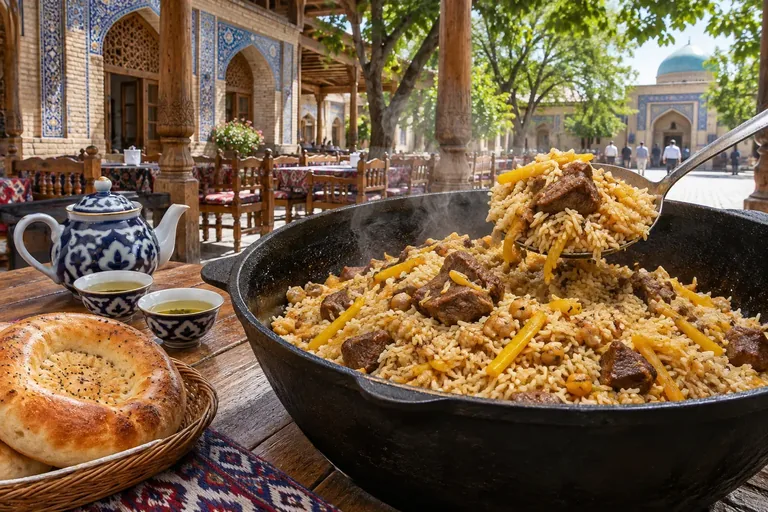
Food in Uzbekistan is not an add-on to sightseeing — it is one of the main reasons to come. Uzbek cooking grew out of the Silk Road: Persian rice dishes, Turkic meat and dairy traditions, Uyghur noodles and Russian influences all meet at the same table. Meals are generous, bread is sacred and tea is poured constantly. This guide explains the dishes you will meet, when locals eat them and where travellers can try good versions.
The dishes to know
Plov (osh)
Plov is the national dish, and the culture surrounding it was added to UNESCO's list of Intangible Cultural Heritage in 2016. Rice is cooked in a cast-iron kazan with lamb or beef, onions and lots of carrots, usually the local yellow kind, seasoned with cumin and sometimes chickpeas, raisins or a whole head of garlic. Every region has its own style: in Tashkent the rice and meat are mixed and served with slices of kazy horse sausage and quail eggs; in Samarkand the layers are left unmixed and the meat is laid on top. Plov is above all a lunch dish: plov centres cook it once a day in huge cauldrons and it often runs out by mid-afternoon. It comes with achichuk, a fresh salad of tomatoes and thinly sliced onion.
Non — bread
Round flatbread baked in a clay tandoor accompanies every meal. Each city is proud of its own; Samarkand non is the most famous — heavy, dense and glossy, it keeps for days and travellers often carry it home. Bread is treated with respect: it is broken by hand, never cut on the table, never placed upside down and never thrown away.
Samsa
Flaky pastries baked against the wall of a tandoor, usually filled with minced lamb and onion. In autumn look for pumpkin samsa, and in spring for samsa filled with fresh greens. Samsa is the classic street snack — buy it hot from a bakery or bazaar stall.
Lagman
Hand-pulled noodles of Uyghur origin, served either as a soup or with a thick sauce of meat, peppers, tomatoes and vegetables. A fried version is called boso lagman. It is a good choice when you want something lighter than plov.
Manti and chuchvara
Manti are large steamed dumplings filled with chopped lamb and onion, often with a little tail fat for juiciness, served with yoghurt or sour cream. Pumpkin manti are a good vegetarian-friendly option. Chuchvara are small dumplings, served in broth or fried.
Shashlik
Skewers grilled over charcoal: lamb, beef, chicken, liver or minced lyulya. They come with raw onion and vinegar and are ordered by the skewer — a usual evening meal with friends.
Shurpa, dimlama and other home dishes
Shurpa is a clear soup with large pieces of meat, potatoes, carrots and chickpeas. Dimlama is meat and vegetables slowly stewed in their own juices. In Tashkent, try norin — cold boiled horsemeat with very finely cut noodles, a traditional morning dish.
Regional specialities
- Khorezm (Khiva): shivit oshi, bright green noodles infused with dill, topped with a meat-and-vegetable stew and yoghurt; tukhum barak, delicate dumplings filled with egg; and pumpkin manti.
- Navruz (21 March): sumalak, a sweet paste of sprouted wheat cooked all night in a cauldron by neighbours and families.
- Sweets: halva, crystallised sugar navvot served with tea, and an endless choice of dried apricots, raisins and nuts. In late summer, melons and grapes are superb.
Tea and drinks
Green tea (ko'k choy) is drunk everywhere; black tea is also common, especially in Tashkent and Khorezm. The host pours the tea back into the pot several times to brew it, then serves each guest a half-filled bowl — a sign of respect, so that it is refilled often and stays hot. Samarkand has a long wine-making tradition; the Khovrenko winery, founded in 1868, offers tastings to visitors aged 18 and over.
Where to try it
Tashkent
- Besh Qozon, next to the TV Tower — watch plov being cooked in giant cauldrons; approximately 80,000 som per person. Come between 11:00 and 15:00.
- Kamolon Osh — an everyday plov canteen with kazy and quail eggs; approximately 70,000 som.
- Rayhon — a chain serving the staples (plov, shurpa, lagman, manti, chuchvara, dimlama, tandoor samsa) at modest prices; approximately 100,000 som.
- Caravan and Afsona — Uzbek food with a contemporary presentation in decorative interiors; approximately 200,000 som. Afsona is good for tasting several kinds of plov in small portions.
- Navvat — a modern teahouse for kebabs, lagman and tea in the evening; approximately 180,000 som.
- Chorsu and Alay bazaars — for bread, dried fruit, kazy and kurt cheese balls; a guided food tour of Chorsu helps you know what you are tasting.
Samarkand
- Siab Bazaar — Samarkand non, halva and navvot straight from the stalls.
- Bibikhanum Teahouse — plov, samsa and lagman on a veranda facing the mosque; approximately 90,000 som.
- Karimbek — a large restaurant for plov, shashlik and manti, popular with families; approximately 150,000 som.
- Old City — Uzbek and European dishes with a separate vegetarian selection; approximately 180,000 som.
Bukhara
Try plov at a dedicated plov centre at lunchtime and spend an evening at a teahouse in the old town near Lyabi-Hauz, where samsa, shashlik and green tea are the staples.
Khiva
- Khorezm Art Restaurant — shivit oshi, tukhum barak and pumpkin manti in the cells of a historic madrasah; approximately 130,000 som.
- Terrassa — Khorezmian dishes and vegetarian options on a rooftop facing Kalta Minor; approximately 150,000 som.
Fergana Valley
The valley's farmers' markets are famous for fruit; a food tour starting at Fergana's central bazaar adds tandoor bakeries and a teahouse plov.
Learn to cook it
Plov master classes in Tashkent and Samarkand and a Khorezm cooking class in Khiva let you shop for ingredients, work the kazan and eat the result. They are the best way to understand why each family claims its plov is the right one.
Tips for eating out
- Many restaurants add a service charge of about 10–15% — check the bill.
- Vegetarians should look for pumpkin samsa and manti, salads, bread with yoghurt and vegetable dishes; say "go'shtsiz" (without meat) when ordering.
- Bazaars and small teahouses take cash only.
- Eat plov at lunchtime, not dinner — that is when it is freshest.
- Accept tea when it is offered; refusing everything can seem unfriendly.
Places in this guide
- Bukhara Plov CentreLunch only: real Bukhara plov from giant kazan cauldrons.
- Fergana Central BazaarBusy farmers' market in the city centre, full of fruit, bread and spices.
- Khorezm Art RestaurantA restaurant in the cells of the Allakuli Khan Madrasah specialising in Khorezmian national dishes.
- Terrassa Cafe & RestaurantA rooftop restaurant inside Itchan Kala serving Khorezmian dishes with views of Kalta Minor and the city wall…
- Lyabi-Hauz TeahouseGreen tea and sweets on daybeds at the water's edge.
- Bibikhanum TeahouseA traditional teahouse opposite Bibi-Khanym: plov, shashlik and tea with a view of the mosque.
- Karimbek RestaurantA restaurant with several themed national-style halls, known for Uzbek cuisine.
- Khovrenko Samarkand WineryA winery founded in 1868, with a small winemaking museum and a tasting hall.
- Old City RestaurantA restaurant known for Uzbek and European dishes, a cosy atmosphere and vegetarian choices.
- Siab BazaarSamarkand's best-known farmers' market next to Bibi-Khanym: bread, dried fruit, halva and spices.
- Afsona RestaurantA restaurant presenting Uzbek cuisine in a contemporary style, with several kinds of plov and refined decor.
- Alay BazaarA historic central market for dried fruit, nuts, spices and seasonal produce.
- Besh Qozon — Central Asian Plov CentreFamous plov centre next to the TV Tower, where tonnes of plov are cooked daily in giant cauldrons.
- Caravan RestaurantAn ethno-style restaurant-cafe decorated with crafts, serving plov and Uzbek dishes with a modern touch.
- Chorsu BazaarTashkent's most famous market: spices, dried fruit, bread and handicrafts under a huge blue dome.
- Kamolon OshA plov centre loved by locals: hearty, fragrant Tashkent plov with simple, fast service.
- Navvat TeahouseA modern chaikhana in the centre serving kebabs, plov, tea and Uzbek dishes.
- Rayhon National CuisineA popular Tashkent chain of Uzbek eateries: plov, shurpa, lagman, manti and samsa at modest prices.